The Wallisian language (Uvean) is the home language of 57.3% of residents, Futunan of 28.2% and French of 14.3%, and French is the official language. All three are in daily use, few islanders speak English, and a common Wallisian greeting is "Mālō te maʻuli".
Culture ·
Wallisian Language and Futunan: What Visitors Should Know
The Wallisian language and Futunan explained: who speaks what, how French fits in, and the greetings we found, with honest gaps on other phrases.
01
Three languages in daily life
If you are asking what language is spoken in Wallis and Futuna, the answer is three: French is the official language, and Wallisian and Futunan are the island languages. In 2023, Wallisian was the home language of 57.3% of residents, Futunan of 28.2% and French of 14.3%. In 2018, 84.2% of people aged 14 and over could speak, read and write French.
The tourism board notes that few islanders speak English, though tourism professionals mostly do. Wikivoyage's advice is that knowing some French is strongly advised.

02
The Wallisian language (Uvean)
Wallisian, also called Uvean (langue wallisienne), is closely related to Tongan and has borrowed heavily from it. Tongan invasions of the 15th and 16th centuries shaped Wallis, while Futuna kept more pre-Tongan culture.
It has honorific, commoner and vulgar registers, which is a reminder that the way you speak depends on whom you address. Missionaries gave existing words Christian meanings, such as aho tapu for Sunday.

03
Futunan
Futunan is closely related to other Western Polynesian languages. It is classed as endangered, with about 2,500 native speakers in the territory in 2018.
The decline is tied to large migration to New Caledonia after the Second World War. In Futuna itself, 94.5% reported Futunan as their home language in 2018. Dutch navigators recorded 118 Futunan words in 1616, the earliest written record of the language.

04
Greetings you can use
A common Wallisian greeting is "Mālō te maʻuli" (hello), often written without macrons. In Futunan, "malo le ma'uli" is listed as "good morning". If you want to try a few words, those are the ones to use.
We hold no reliable list for thank you, goodbye or please in either language, and we would rather tell you so than guess. Ask your host to teach you, or use the Territorial Department of Cultural Affairs as a starting point for guidance.
05
Reading and writing the languages
The glottal stop is called fakamoga and the macron fakaloa; both are often omitted in everyday writing. The first Wallisian vocabulary was compiled by Pierre Bataillon in 1840.
Local words also name objects: giant tapa is called gatu in Wallisian and siapo in Futunan, and mats are called fala.

06
Words you will meet on the ground
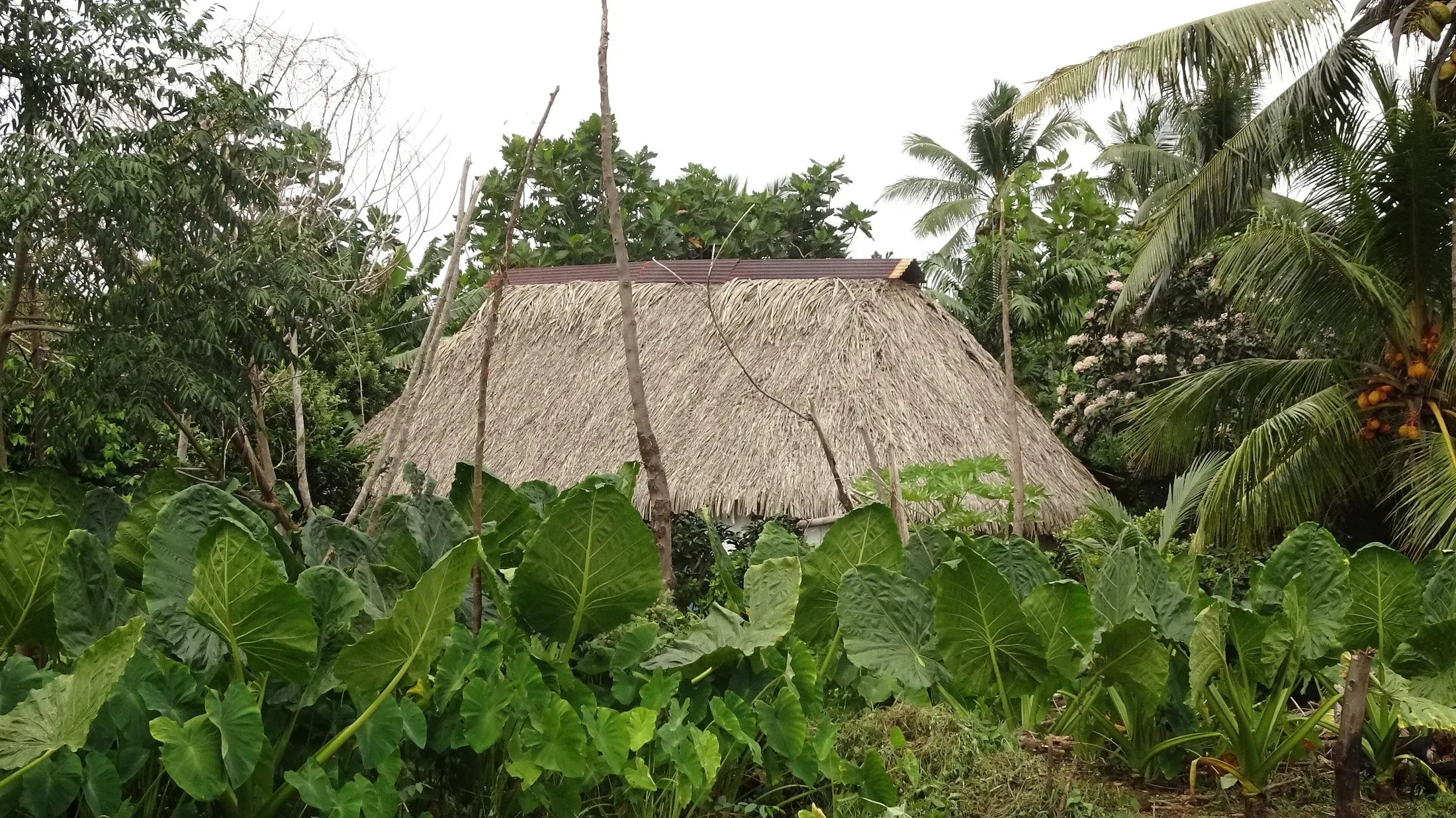
Even without speaking the languages you will read and hear a few terms. A tanoa is the bowl in which kava is prepared, a fale is a traditional wood-framed house with thatch from coconut or pandanus leaves, an umu is the earth oven, and a motu is a lagoon islet. Katoaga is the customary festival at which goods such as pigs, mats and tapa are exchanged.
Learning these few words will make signs, menus and invitations easier to follow, and shows interest in the culture.
07
Practical tips for travellers
Use French for logistics, such as hire cars, hotels and shops, and add a Wallisian or Futunan greeting when you meet someone. Kava rituals have their own rules about silence.
Plan ahead for communication on arrival: mobile coverage is the Manuia 4G network, and SIM cards are sold at SPT offices.
Questions people ask.
- What language is spoken in Wallis and Futuna?
- French is the official language, and Wallisian and Futunan are the two island languages. In 2023 the home language was Wallisian for 57.3% of residents, Futunan for 28.2% and French for 14.3%.
- How do you say hello in Wallisian?
- A common Wallisian greeting is "Mālō te maʻuli", often written without macrons. In Futunan, "malo le ma'uli" is listed as "good morning".
- Is Wallisian related to Tongan?
- Yes. Wallisian is closely related to Tongan and has borrowed heavily from it, and Tongan invasions of the 15th and 16th centuries shaped Wallis more than Futuna.
- Will I get by with English?
- In tourism, probably, since tourism professionals mostly speak English. Few other islanders do, so some French is strongly advised.
Stay on the islands with IMPT.
IMPT (impt.io) is the booking platform behind this site: 8 million hotels and apartments across 195 countries, including the Pacific neighbours of Wallis & Futuna. Stays on Wallis and Futuna themselves are arranged by enquiry with each host. Every stay booked through IMPT supports climate action through the IMPT Climate Contribution programme.
Read next.
The invitation starts here
Be part of the
next chapter.
Join the waitlist First access to stays, routes and launch news.
No spam. Unsubscribe any time.