Explore the islands
Things to do.
Lagoon days, crater lakes, old forts and the slow business of arriving as a guest.
Read onThis is not a resort destination, and its charm depends on that.Plan loosely, ask locally, and be ready to adjust.
- Islets
- More than a dozen, all uninhabited
- Largest lake
- Lalolalo, 400-500 m across
- Highest climb
- Mont Puke, 524 m
- Getting around
- No public transport or taxis; hire a car
- Bird areas
- Two Important Bird Areas
01
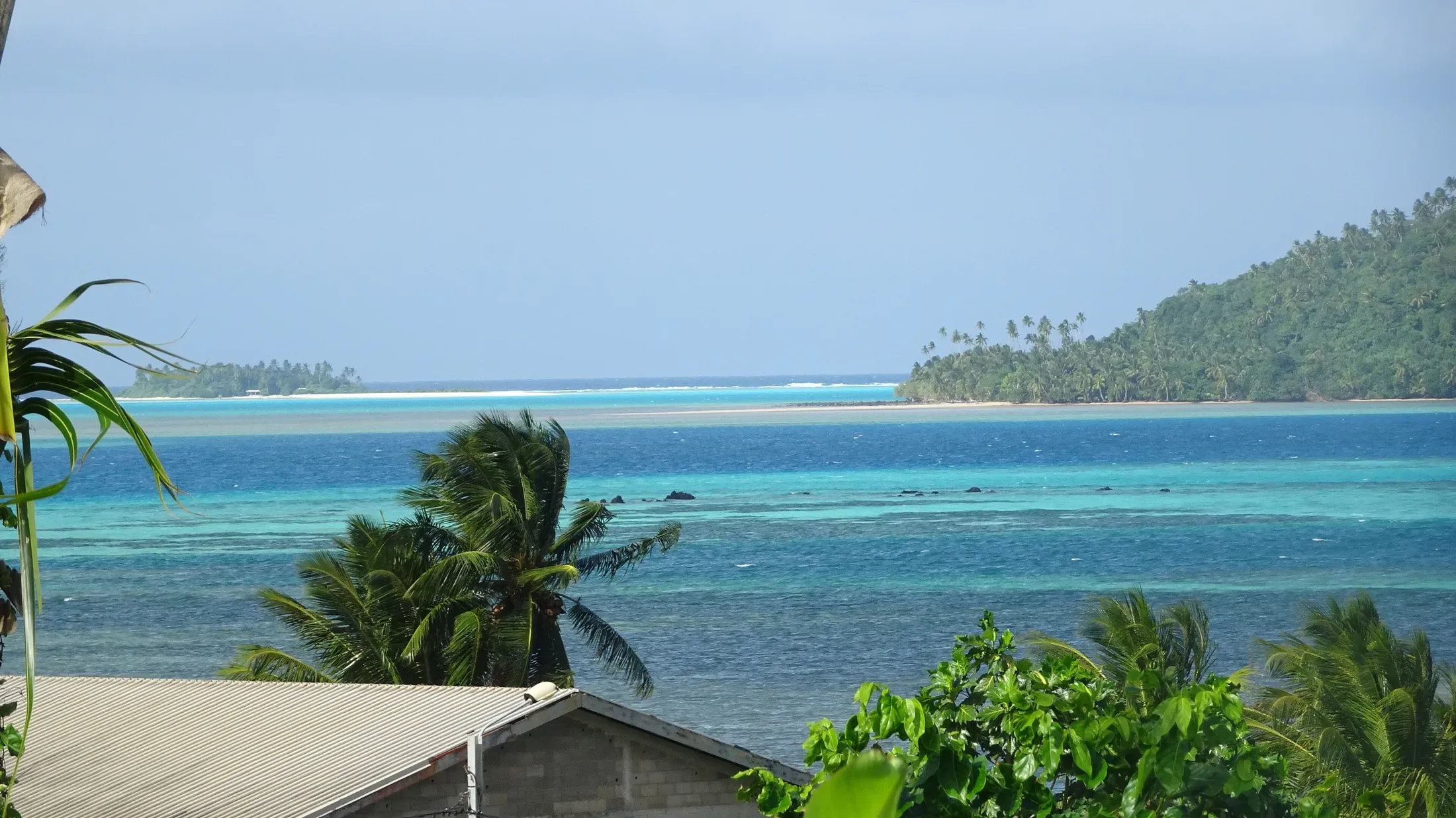
Across the lagoon to the islets
The Wallis lagoon holds more than a dozen uninhabited islets, called motu, and the islets are the first thing most visitors want. You reach them by taxi boat, or by kayak from the Vakala watersports centre at Liku. Taxi boats are listed at Gahi Bay, at Vailala and at Alele.
Before you go, check with the Tourist Office about protected areas and rules. The islets named on one operator page include Faioa, Fenuafoou and Nukuatea. Nukuatea was bought by a trader in 1830 for sea-cucumber fishing. Chiefs almost always grant permission for islets, according to a community guide, and the water-taxi operator usually handles the asking.

02
By outrigger canoe
About ten traditional sailing canoes still sail the northern Wallis lagoon, grouped under the Lelei Hifi league, and sailing on them is open to tourists. The Lomipeau canoe, said to hold about 100 people, symbolises the link between Uvea, Tonga and Polynesian seafaring.
The Nukuteatea Association offers a traditional outrigger canoe day with an umu lunch from Vaitupu. You can also learn to row a va'a at Leava on Futuna with Avamoana Va'a.

03
Under the water
The reef is what draws divers. Halalo, in the Mua district, has a dive centre, Evasion Bleue. Marine life around Wallis includes hawksbill turtles, spotted eagle rays, sharks, parrotfish, Napoleon fish, spotted garden eels, anemones, sea fans, corals and dolphins.
The board lists six key biodiversity areas on Wallis, and coral monitoring since 1999 shows the Wallis reefs better protected than those of Futuna and Alofi. Humpback whales and pygmy killer whales may be seen in late summer or early autumn, though nothing is ever promised. Wallis has no snakes or dangerous predators, according to the tourism board.

04
The crater lakes
Lake Lalolalo is the largest lake in the territory, in the southwest of Wallis, off Route 1 between Mala'etoli and Ahoa. A lookout lets you see the whole of the near-circular crater, which is roughly 400 to 500 metres across and at least 80 metres deep, with sheer rock walls. Flying foxes and tropical birds live in the forest around it.
Kikila, hidden in the forest, covers about ten and a half hectares, against fifteen for Lalolalo, and Lanutavake and Alofivai are smaller still. Remember that these lakes are the island's freshwater reserves.

05
Forts, chapels and a museum
Talietumu, also called Kolonui, is a fortified Tongan settlement built around 1450 in the Mua district, about nine kilometres southwest of Mata'Utu. Its central platform is about five metres high and 80 metres long, surrounded by a basalt defensive wall. At such sites, check that the land is not privately owned and ask whether permission is needed.
The Cathedral of Our Lady of the Assumption in Mata'Utu was built in blue volcanic stone, and village chapels such as the one at Alele have roofs decorated with tapa panels. The Uvea Museum Association runs a museum on the war years, opened in 2006 and open by appointment only, according to its listing, and the board's tour called On the American Trail includes US bunkers.

06
Walking and driving on Futuna
On Futuna the great walk is Mont Puke, 524 metres, the highest point of the territory. The climb is described as demanding and suited to experienced hikers, with wide views. The board's Futuna tour also names the Mataki'Uvea viewpoint, which looks over the ocean and the Poi basilica, the Vila Malia viewpoint, the Kolopelu chapel and the Fatua headland, called the petrified backbone of King Sakumani.
Roads are poorer than on Wallis, with dirt tracks to key sites, and since Cyclone Tomas the main road has been cut at Pointe des Pyramides.

07
Bird islets and Alofi
The territory has 39 bird species, six of them globally threatened, and two Important Bird Areas, according to BirdLife. Alofi is one of those areas, with a colony of red-footed boobies and the vulnerable shy ground dove. Alofi is reached by boat, with the Association Vele taxi boat leaving from Vele on Futuna. It also has Alofitai beach, the Sacred Heart chapel and the hot springs of Vaivevela.
The Tourist Office is the right place to ask about rules before landing anywhere.

08
Watching the dances, and what to expect
Dances take place at festivals. On Bastille Day, 14 July, and Territory Day, 29 July, a kava ceremony, dances and a mass take place that visitors can join. On 15 August dancers perform at the Assumption festival.Ask before you photograph, because photography is often prohibited at traditional ceremonies.
Be honest with yourself about the practicalities. There is no public transport and no taxis, so you will want a hire car. Many shops lack card terminals. Access for visitors with reduced mobility is limited. The territory plans to develop homestays and secure hiking trails, with no luxury hotel projects, so the quiet is part of the plan.


The directory · water & air
Every operator on the islands.
Dive centres, taxi-boats to the motu, traditional outrigger-canoe days, kitesurfing, sport fishing, the WWII museum and ultralight flights over the lagoon — each a real, listed operator in Wallis or Futuna. Arrange and book locally.


Wallis
Nukuteatea Association
Nukuteatea Association, traditional outrigger canoe day with umu lunch, Vaitupu (Wallis).
Source

Wallis
Uvea Royal Sport Fishing Association
Uvea Royal Sport Fishing Association, Halalo (Wallis).
SourceWallis
Uvea Museum Association
Uvea Museum Association, WWII museum and tours, Wallis (appointment only per the listing).
Source


The directory · car hire & tours
Getting around the islands.
There is no public transport and no taxis on the islands, so a hire car is the way to travel — these are the listed hire desks and tour operators on Wallis and Futuna.

The directory · eat & drink
Where to eat and drink.
Snack bars, a bakery, a pizzeria, a bar and the other listed places to eat on Wallis and Futuna.


The directory · Wallis, Futuna & Alofi
Every place worth the detour.
Beaches and sunset spots, the crater lakes, the peaks, the churches and the archaeological sites across Wallis, Futuna and Alofi.

Wallis
Vailala beach
Vailala beach (north Wallis) has fine white sand and is a sunset spot; Lausikula beach (south) is also a sunset spot.
SourceWallis
Gahi Bay
Gahi Bay is the only authorised anchorage on Wallis; the restaurant La Paillote, a va'a base and the Chapelle de Gahi are beside the taxi-boat pier.
Source
Wallis
Mata'Utu
Mata'Utu is the capital and main port of Wallis, with the blue volcanic-stone cathedral.
Source


Wallis
Kolonui — the Talietumu fort
Kolonui is the Talietumu fort site, once the residence of Tongan chiefs.
SourceWallis
Ultralight flights over the lagoon
Ultralight flights over land and lagoon leave from Hihifo airfield; they are best at low tide for blue tones.
SourceWallis
On the American Trail (WWII tour)
The board's "On the American Trail" tour includes US bunkers and a guided option from the Uvea Museum Association.
Source
Futuna
Tuatafa black-sand beach
Tuatafa, in the far north of Futuna, is a black volcanic-sand beach with a natural pool and sunsets.
Source
Futuna
Vainui black-sand beach
Vainui black-sand beach on Futuna is the site of the 1839 Vai war.
Source
Futuna
Mataki'Uvea viewpoint
Mataki'Uvea viewpoint on Futuna looks over the ocean and Poi basilica.
SourceFutuna
Vila Malia viewpoint & Kolopelu chapel
Futuna's board tour also names the Vila Malia viewpoint, Kolopelu chapel and the Fatua headland, called the "petrified backbone of King Sakumani".
Source
Futuna
Royal burial sites of Veliteki and Niuliki
Royal burial sites of Veliteki and Niuliki (Vele) and the Fai'umu O Papa "cannibal oven" are on the board's Futuna tour.
SourceFutuna
Pierre Chanel's landing cross, Leava
Pierre Chanel is marked by a cross at Leava, where he landed in 1837.
Source
Futuna
Fale tauasu — the village meeting houses
Futuna has fale tauasu (meeting houses) in each village where men gather nightly for kava.
SourceAlofi
Alofi
Alofi, reached by boat, has Alofitai beach, the first freshwater well, the Sacred Heart chapel and Vaivevela hot springs on the board's tour.
Source

Futuna
Futuna's fringing reefs
Futuna's fringing reefs are 50-100 m wide, with a volcanic, rocky coast.
SourceThe directory · land & lagoon
The nature of Wallis & Futuna.
The reef and lagoon, the volcanic land, the birdlife and the sea — the islands' natural record, each note from its source.
Mid-Pleistocene volcanic activity created crater lakes on Uvea including Lalolalo, Lanutavake, Kikila and Alofivai.
SourceListed lake areas: Lalolalo 15.2 ha, Kikila 10.5 ha, Alofivai 5.8 ha, Lanutavake 3.9 ha.
SourceLake Lalolalo is the largest lake in the territory, in the southwest of Wallis, off Route 1 between Mala'etoli and Ahoa.
SourceLalolalo is a crater lake roughly 400-500 m across and at least 80 m deep, nearly circular with sheer rock walls.
SourceLalolalo is stratified: fresh at the surface, 31 ppt salinity at the bottom and no oxygen below 10 m.
SourceA 2011 research team found that water brought up from 80 m depth "boiled" like a fizzy drink and smelled of hydrogen sulfide; blind white eels were reported.
SourceA lookout gives a view of the whole of Lalolalo.
SourceFlying foxes and tropical birds live in the forest around Lalolalo.
SourceThe crater lakes are freshwater reserves for the island.
SourceLake Lalolalo figures in local mythology and in historical territorial disputes.
SourceMont Puke is said to be the refuge of the goddess Finelasi, protector of Futuna.
SourceAlofi is a BirdLife Important Bird Area, with a red-footed booby colony and the vulnerable shy ground dove.
SourceBirdLife records 39 bird species in the territory, 6 globally threatened, and 2 Important Bird Areas.
SourceHumpback whales and pygmy killer whales may be seen in late summer or early autumn, though sightings are never certain.
SourceMarine life around Wallis includes hawksbill turtles, spotted eagle rays, sharks, parrotfish, Napoleon fish, spotted garden eels, anemones, sea fans, corals and dolphins.
SourceThe board lists six key biodiversity areas on Wallis.
SourceCoral monitoring since 1999 at six sites shows Wallis reefs better protected than those of Futuna and Alofi.
SourceIslets named on the cited operator page include Faioa, Fenuafoou and Nukuatea.
SourceNukuatea was bought by a trader in 1830 for sea-cucumber fishing.
Source


When you are ready to plan, start with how to reach the islands at all.
Enquire about your visitThe invitation starts here
Be part of the
next chapter.
Join the waitlist First access to stays, routes and launch news.
No spam. Unsubscribe any time.