History & heritage
Three thousand years.
Voyagers, Tongan chiefs, Dutch sailors, a saint, a protectorate and a long wartime silence, all inside a territory of about 142 square kilometres.
Read onThe history of Wallis and Futuna is held by its people. It begins with Lapita voyagers and runs, by way of kings, whalers and a world war, to the three kingdoms and the French overseas territory of today.
- Settled
- By Lapita voyagers, roughly 3,000 years ago
- Charted
- Futuna, May 1616; Wallis sighted 1767
- Protectorate
- Wallis 1887, both groups 1888, until 1961
- Territory status
- 29 July 1961
- Overseas collectivity
- 28 March 2003
- Customary kingdoms
- Uvea, Sigave, Alo
01
The first voyagers
Wallis and Futuna were first settled by Lapita voyagers roughly 3,000 years ago, although archaeologists debate dates between about 1300 and 800 BC. The islands were stopovers for boat traffic, mostly between Fiji and Samoa.
Wallis, in time, underwent greater changes than Futuna in society, language and culture. Futuna kept its own cultural and political autonomy, in the words of one historian cited here, and although Futuna is closer to Tonga, its language and culture are more Samoan. Samoa and Futuna are linked in islanders' oral origin stories.

02
The Tongan era
The kingdom of Uvea was founded in the 15th century. Its first three districts date from the Tongan conquest, when the island was divided among the chiefs Hoko, Kalafilia and Fakate. Around 1450 a fortified Tongan settlement was built at Talietumu, described as the last Tongan holdout on Uvea.
Futuna, according to the tourism board, repelled Tongan invasion attempts in the 15th and 16th centuries. The ruling line of Alo is traditionally said to descend from Samoa, the Fakavelikele lineage, with a peaceful arrival in oral tradition. At Anakele lie the burial place of King Fakavelikele and the origin of the current Tui'Agaifo dynasty.

03
Dutch sailors and Samuel Wallis
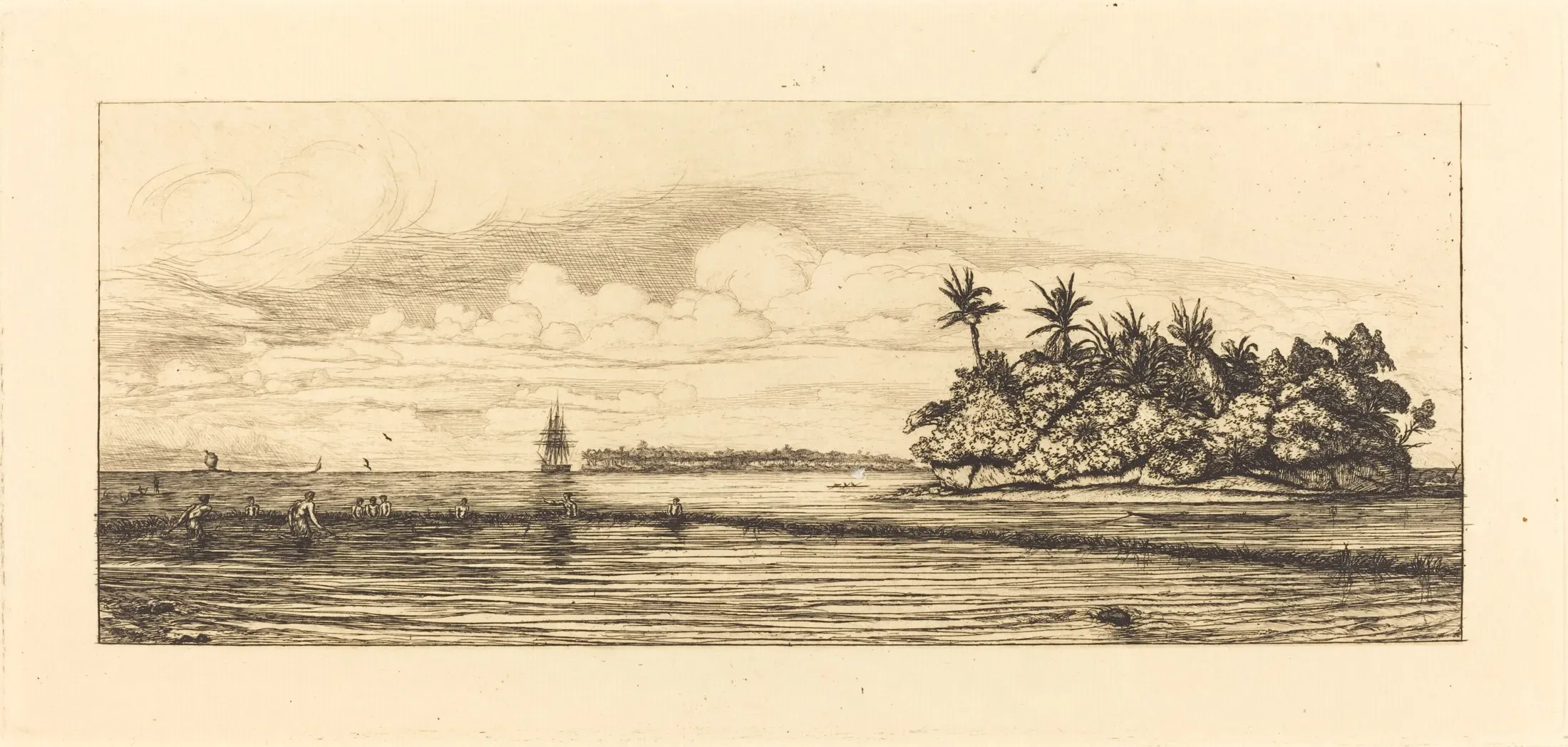
In May 1616 the Dutch navigators Willem Schouten and Jacob Le Maire were the first to chart Futuna. They named the group the Hoorn Islands, after the Dutch town of Hoorn where their expedition began, and they called a natural harbour on the southwest coast of Futuna Eendrachts baai, Unity Bay. They also recorded 118 Futunan words, the earliest written record of the language.
In 1767 Samuel Wallis, commanding HMS Dolphin, sighted the island of Uvea and renamed it after himself. American whaling ships later called at Futuna for water, wood and food; the first known was the Independence, in 1827.

04
The missionaries
Bishop Pompallier sailed from Le Havre on 24 December 1836 with Marist missionaries, among them Pierre Chanel. Pierre Bataillon reached Uvea on 1 November 1837, and Chanel landed on Futuna the same month with a brother and an Englishman, Thomas Boag. On Wallis most people had converted by October 1840, and the Lavelua was baptised on 30 October 1842.
On Futuna the welcome was less simple. Niuliki, king of Alo, first welcomed the mission and later opposed it, fearing a loss of authority. On 10 August 1839 the Vai war saw Alo defeat Sigave with guns traded from a whaler, and Chanel tended the wounded. He was killed on 28 April 1841. In 1840 Bataillon compiled the first Wallisian vocabulary, and a printing press was set up at Lano in 1843.

05
Saint of the Pacific
Chanel's relics reached Lyon on 1 June 1850 and returned to Futuna in 1977, and his skull returned in 1985. He was beatified on 17 November 1889 and canonised on 12 June 1954, and is described as the first martyr and patron saint of Oceania.
The Lano Seminary, founded in 1847, is described as the first Catholic seminary in Oceania. The Vicariate of Wallis et Futuna was created in 1935 and became a diocese in 1966. At Kolopopo, the Kalevalio landing place marks where the first missionaries landed in 1837; a cross was raised there in 1887 for the fiftieth anniversary.

06
The protectorate
Wallis asked for French protection in 1842, and Queen Amelia sent a protectorate request on 19 November 1886. France ratified the treaty for Uvea on 5 April 1887. The kings of Sigave and Alo asked to join on 29 November 1887, and the protectorate was extended to Futuna on 16 February 1888. A new treaty was signed on 19 May 1910, valid until 1961.
Queen Amelia reigned from 1869 to 1895. She converted to Catholicism and had a royal palace and a cathedral built at the capital. The tourism board stresses that the islands were never colonised, but a protectorate by treaty, and that is the board's own wording. Until 1961 the territory was administered from New Caledonia.

07
The war years
After June 1940 the islands stayed loyal to Vichy, the last French Pacific territory to do so. No ships called from 1 January 1941, an isolation of about 17 months. On 27 May 1942 the Free French aviso Chevreuil reached Mata'Utu and Wallis rallied, and American forces arrived in late May. Futuna rallied two days after Wallis and was not occupied by the Allies.
At the peak about 6,000 American troops were stationed on Wallis, a period the central bank institute calls one of abundance. US wartime works included a hydrobase at Mu'a Point, a port at Gahi, a 70-bed hospital and roads. The Hihifo bomber airfield became operational in October 1942 and is today's airport. The Americans left in 1946. English words entered Wallisian, and banknotes became part of ceremonies such as the katoaga. Today the Uvea Museum Association's museum in Mata'Utu, opened in 2006, is dedicated to the war on Wallis.

08
Territory, then collectivity
In the referendum of 27 December 1959 the vote was 4,307 yes and 257 no. The territory's status was set by law no. 61-814 of 29 July 1961, ending its subordination to New Caledonia, and 29 July is celebrated as Territory Day. A constitutional revision made the territory an overseas collectivity on 28 March 2003.
Three customary kingdoms survive inside the French state: Uvea, Sigave and Alo. The 1961 statute recognises the kings' authority and powers, and the State pays them an allowance. Tomasi Kulimoetoke II, the 50th Lavelua, who was elected on 12 March 1959, lived until 7 May 2007.

To see how that history is still lived, read on to the kava bowl, the dance ground and the chiefs.
Enquire about your visitThe invitation starts here
Be part of the
next chapter.
Join the waitlist First access to stays, routes and launch news.
No spam. Unsubscribe any time.


